
Finding contradictions in a deposition transcript is one of the slowest parts of litigation prep. When testimony shifts across witnesses or changes subtly over time, teams are often forced to re-read the transcript page by page just to confirm inconsistencies.
A search-first deposition review workflow helps teams find contradictions in deposition transcripts quickly, verify them with source citations, and move straight into analysis instead of rereading hundreds of pages.
Why it’s hard to find contradictions in deposition transcripts
Contradictions in deposition transcripts rarely appear as direct opposites. More often, they surface as:
- Timeline drift (“shortly after” vs. “later that afternoon”)
- Scope changes (“once” vs. “a few times”)
- Causation shifts (“before treatment” vs. “after treatment”)
- Conflicting descriptions of the same event by different witnesses
Manual review depends on memory, notes, and repeated reading. Once multiple depositions enter discovery, testimony inconsistencies are easy to miss under time pressure. These are some of the same challenges covered in 3 Mistakes in Manual Summaries (and How to Avoid Them).
A structured deposition review workflow removes guesswork and replaces rereading with targeted comparison.
A deposition review workflow to find contradictions faster
The workflow is simple and repeatable:
Create Collection → Search or Chat → compare cited answers → jump to transcript
Each step narrows attention to disputed facts while keeping the original testimony immediately accessible.
Step 1: Group related deposition transcripts
To find contradictions in deposition transcripts, testimony must be reviewed in context. Start by grouping transcripts that address the same facts, such as:
- Multiple witnesses to the same incident
- Plaintiff and defense witnesses covering overlapping timelines
- Depositions tied to the same treatment period or event
This creates a shared reference point for searching and comparison.
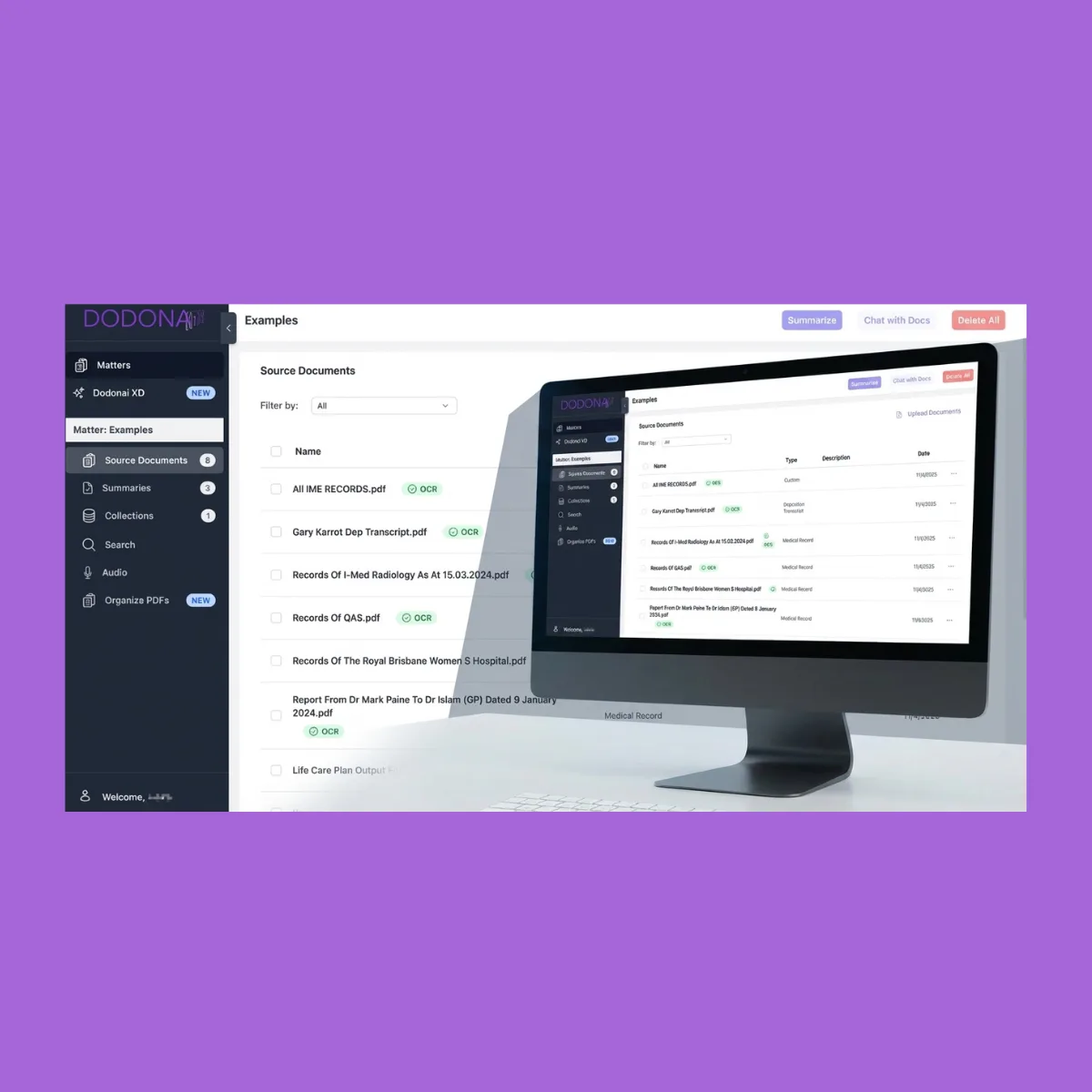
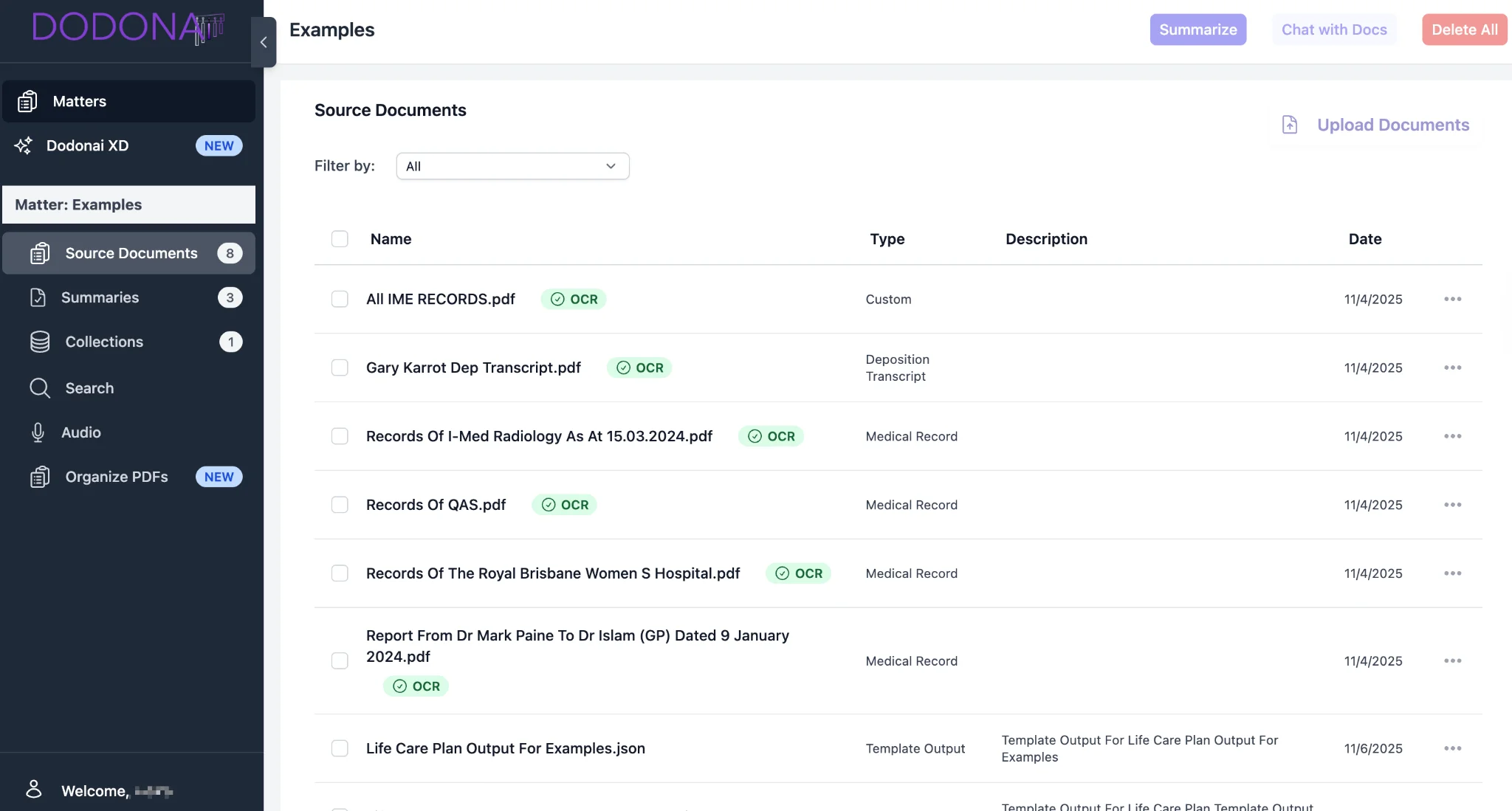
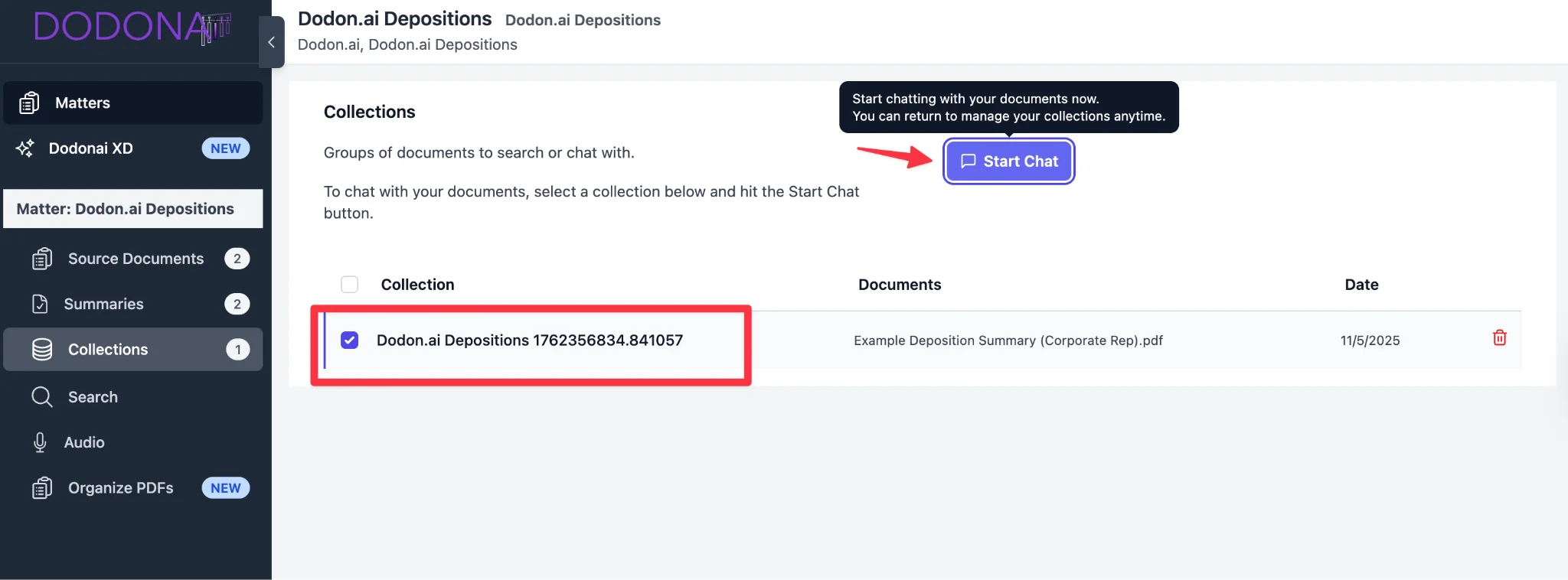
With Dodon.ai: Related deposition transcripts can be grouped into a single collection with no setup, making them searchable together out of the box.
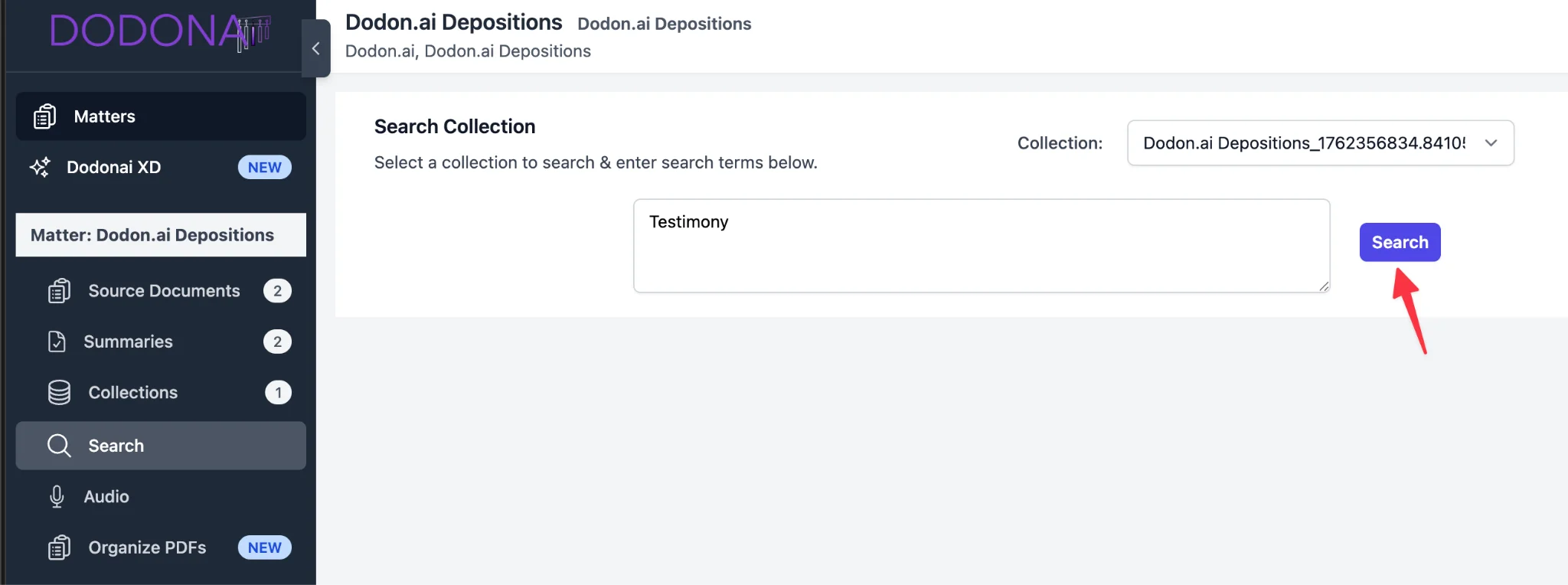
Step 2: Search for disputed facts, not exact wording
Keyword searches miss testimony inconsistencies when phrasing changes. Instead, search for concepts tied to the dispute:
- Date of loss
- First medical visit
- Prior injuries
- Duration of symptoms
- Who was present
This approach surfaces answers that describe the same fact using different language.
With Dodon.ai: The software surfaces relevant testimony across deposition transcripts using semantic search, presenting results with citations to the original pages.
Step 3: Compare cited testimony to identify inconsistencies
Once results are surfaced, contradictions become clear:
Cited deposition testimony, broken into comparable statements for review
- Same question, different answers
- Same event, different timelines
- Same treatment, conflicting descriptions
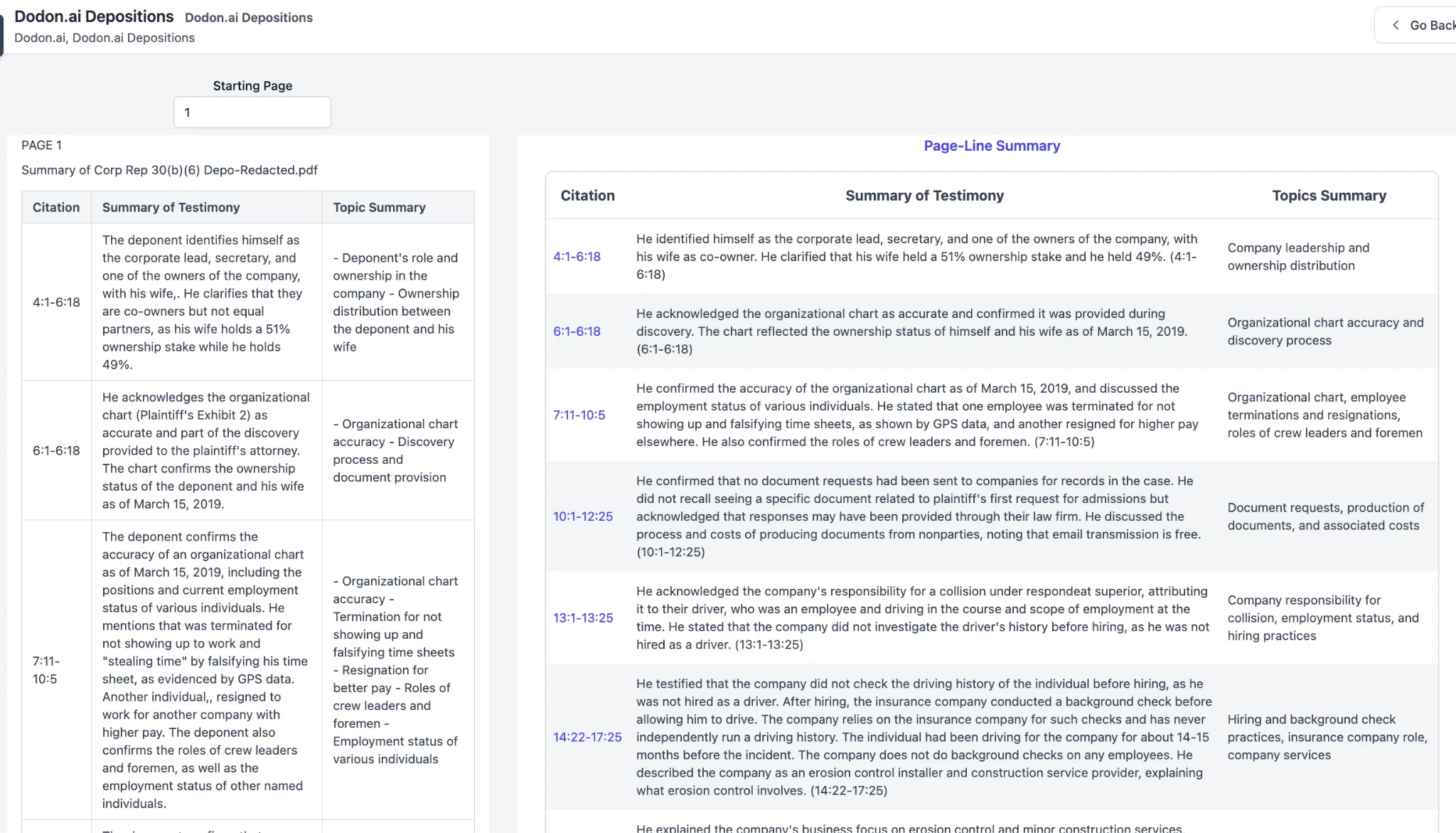
Because citations are attached, teams can confirm differences immediately.
Insider cue: Watch for testimony that narrows or expands over time. These shifts often matter more than direct conflicts.
With Dodon.ai: Search results include page-line citations, allowing side-by-side comparison and fast verification.
Step 4: Jump to the transcript to verify contradictions
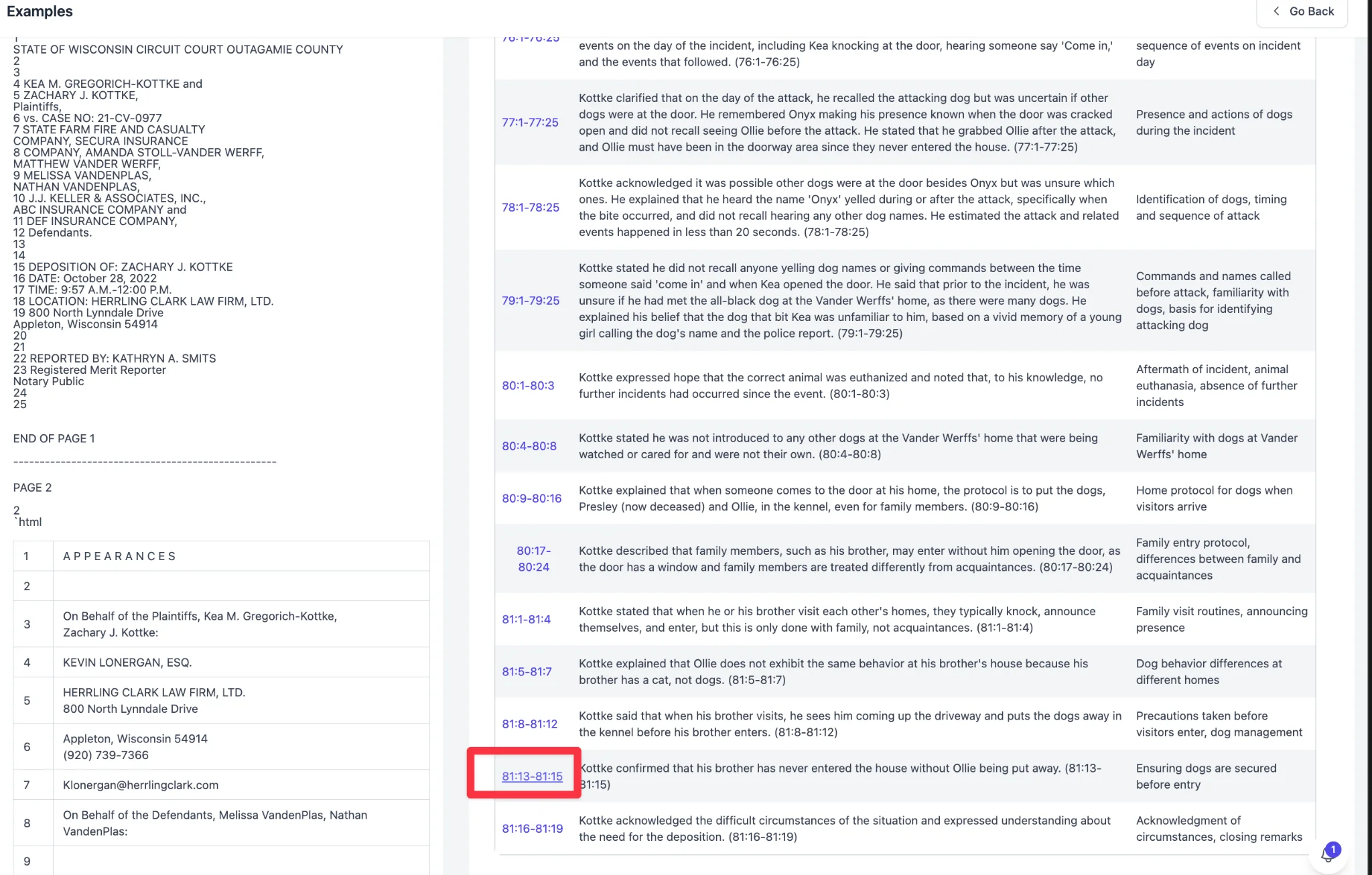
Every contradiction should be confirmed on the source page. Verification protects accuracy and keeps review defensible.
With Dodon.ai: Clicking a citation opens the exact transcript page, so verification stays part of the normal review flow.
Step 5: Apply contradictions to litigation prep
Once identified, contradictions in deposition transcripts support:
- Follow-up deposition questions
- Issue framing for motions
- Expert review and causation analysis
- Settlement positioning
These materials support litigation preparation and discovery, not courtroom evidence, but they sharpen credibility assessment and case strategy. For more on how deposition testimony can be used strategically at trial, see Using Depositions as Evidence: A Deep Dive.
With Dodon.ai: Flagged excerpts can be shared or exported internally, keeping contradiction analysis aligned across the team.
Why this method works
A search-first deposition review workflow helps teams find contradictions in deposition transcripts without rereading, while keeping citations visible for verification.
The result:
- Faster issue spotting
- Fewer missed testimony inconsistencies
- Less transcript fatigue under deadlines
Final word
You don’t need to reread a deposition transcript to find contradictions. A search-first deposition review workflow surfaces testimony inconsistencies quickly and keeps the original testimony one click away.
Software like Dodon.ai accelerates this preparation work while preserving verification and professional judgment.
Try it on one transcript to see how faster contradiction spotting fits into your review process.