

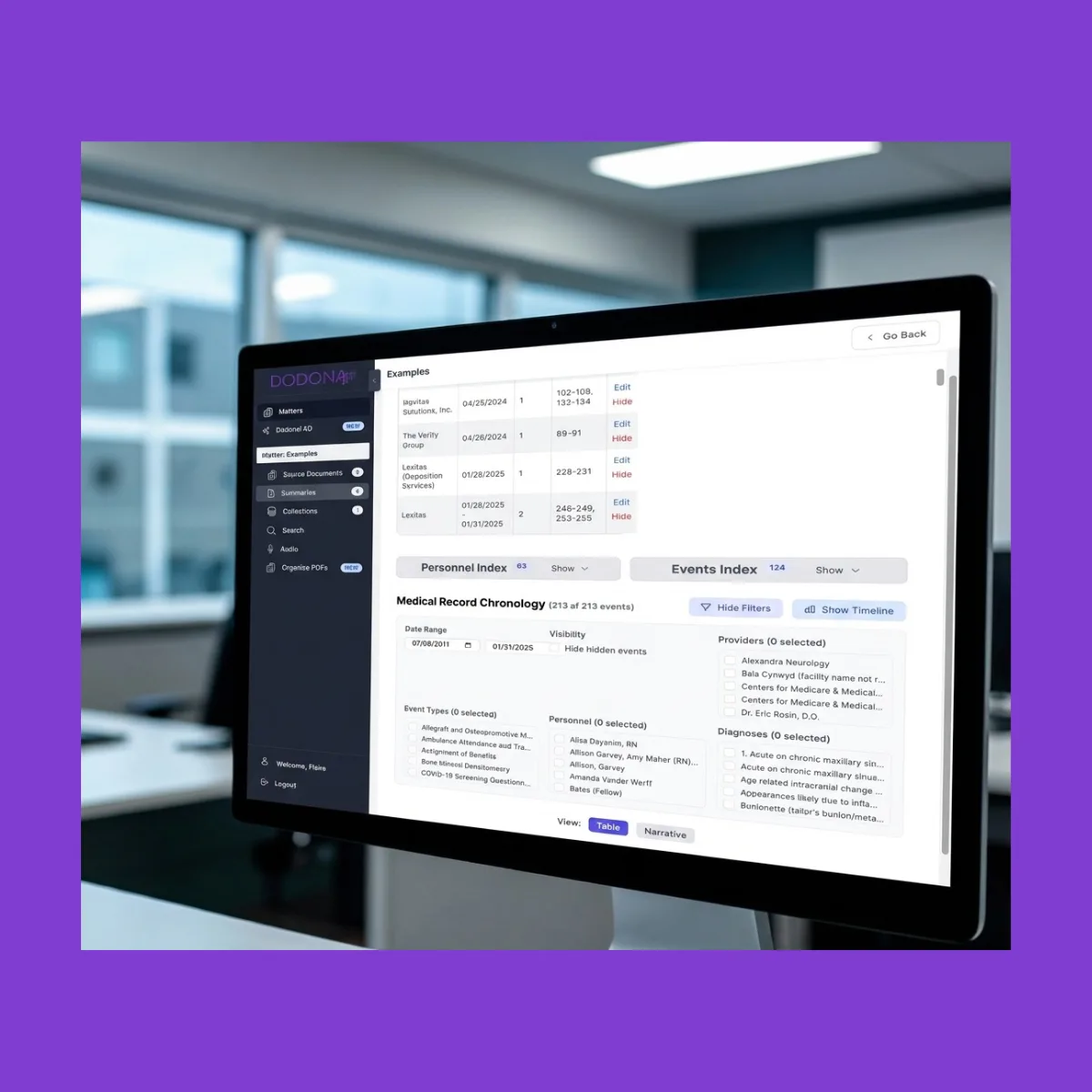
Medical chronology review rarely slows down because of analysis. It slows down because of preparation. Before anyone evaluates damages or causation, teams lose days assembling, cleaning, and organizing records that were assumed to be “ready.”
A medical chronology is meant to give a litigation team a clear timeline of care, so they can assess treatment gaps, causation, and exposure. In practice, most delays happen before that first review even starts.
This article breaks down the real bottlenecks that stretch medical chronology review time, and how teams shorten first-pass review without cutting corners.
Where medical chronology review time is actually lost
1. Incomplete records discovered too late
Every chronology begins with a Medical Records Request, typically sent to known providers listed in disclosures or intake materials. The assumption is that the provider list is complete.
It often isn’t.
Records regularly reference:
- Outside specialists
- Follow-up facilities
- Imaging centers or labs
Those providers are discovered only after review begins, forcing new requests, resets, and delays measured in days or weeks.
Best practice: During early review, watch for providers mentioned inside notes who were never requested. For a deeper dive into this problem, see why medical records look complete but still miss providers.
With Dodon.ai: Provider names referenced inside records are surfaced during summarization, making gaps visible before full review begins.
2. Manual prep before review even starts
Raw medical records rarely arrive ready for review. Teams spend hours on:
- De-duplicating pages
- Re-ordering scans
- Renaming files by provider or date
- Confirming page continuity
This prep work is necessary, but it quietly consumes more time than the actual chronology review.
With Dodon.ai: Bulk uploads are accepted as-is. The software reads text, handwriting, and images out of the box, presenting structured outputs without manual file prep.
3. Timeline extraction done by hand
Extracting a usable timeline means identifying:
- Dates of service
- Providers
- Diagnoses and procedures
- Relevant events tied to claims
Manually, this requires page-by-page reading, note-taking, and cross-checking, even before analysis begins.
This step alone can consume most of the medical chronology review time on large files.
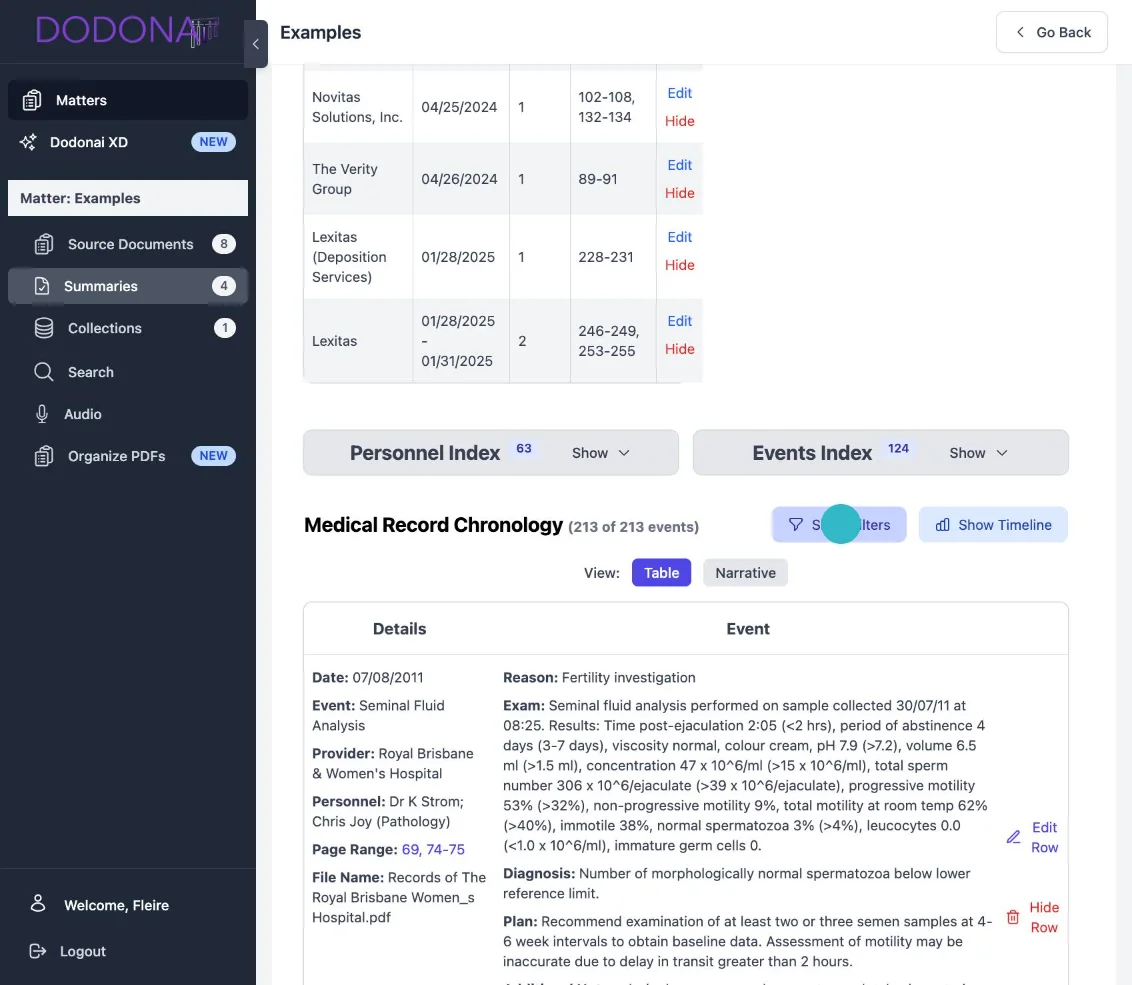
With Dodon.ai: Dates, providers, and treatments are surfaced and presented as a ready-to-review chronology, with citations back to original records. For a walkthrough of this process, see how to build a provider timeline in 10 minutes.
4. No fast way to filter what matters
Once a chronology exists, teams still need to answer practical questions:
- What happened before the date of loss?
- Which provider handled post-incident care?
- Where are the treatment gaps?
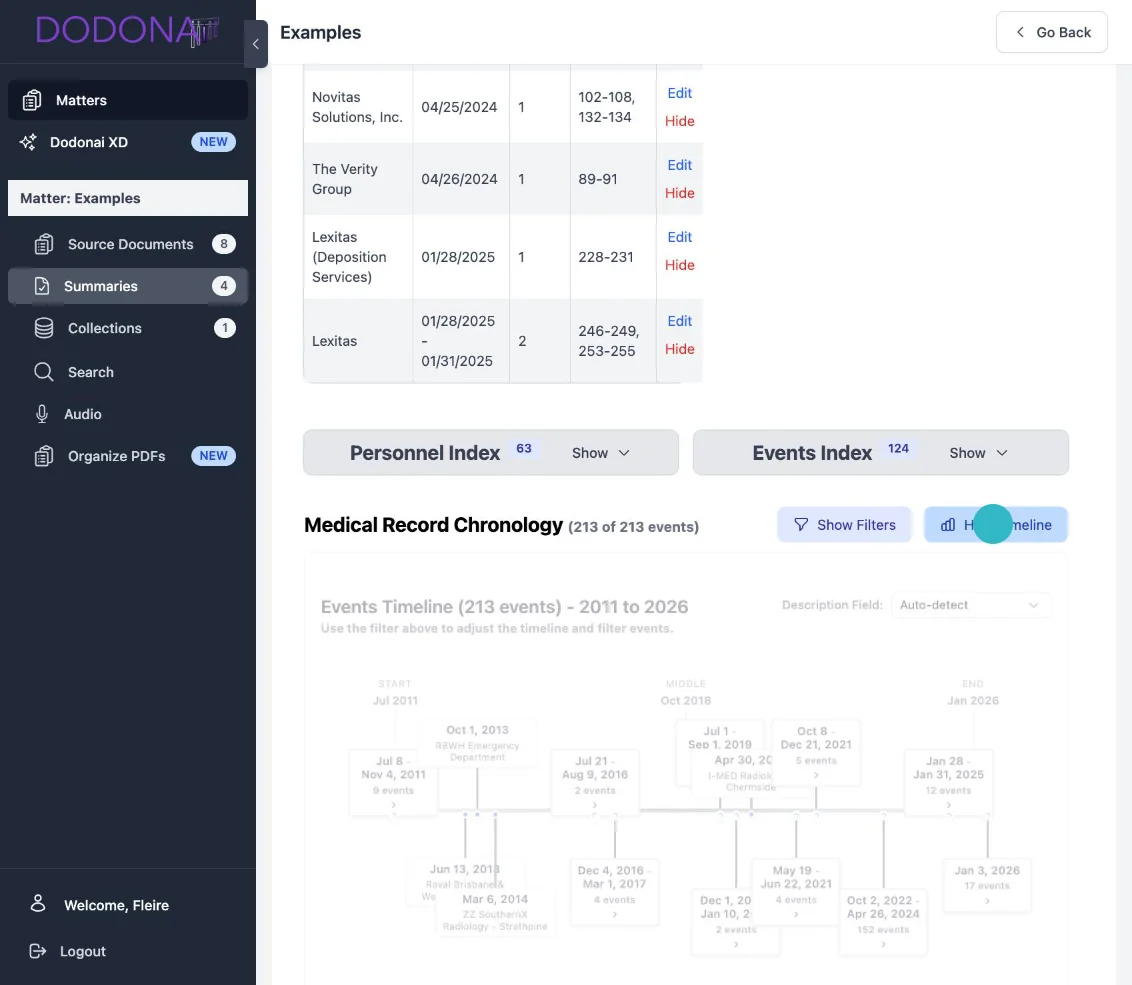
When chronologies are static documents, answering these questions means re-reading.
With Dodon.ai: Chronologies can be filtered by date, provider, or event type, allowing faster first-pass review without re-scanning hundreds of pages.
5. Export friction slows collaboration
Even after review, teams lose time reformatting outputs for:
- Attorneys
- Experts
- Insurers
Manual exports introduce another round of delay and risk version confusion.
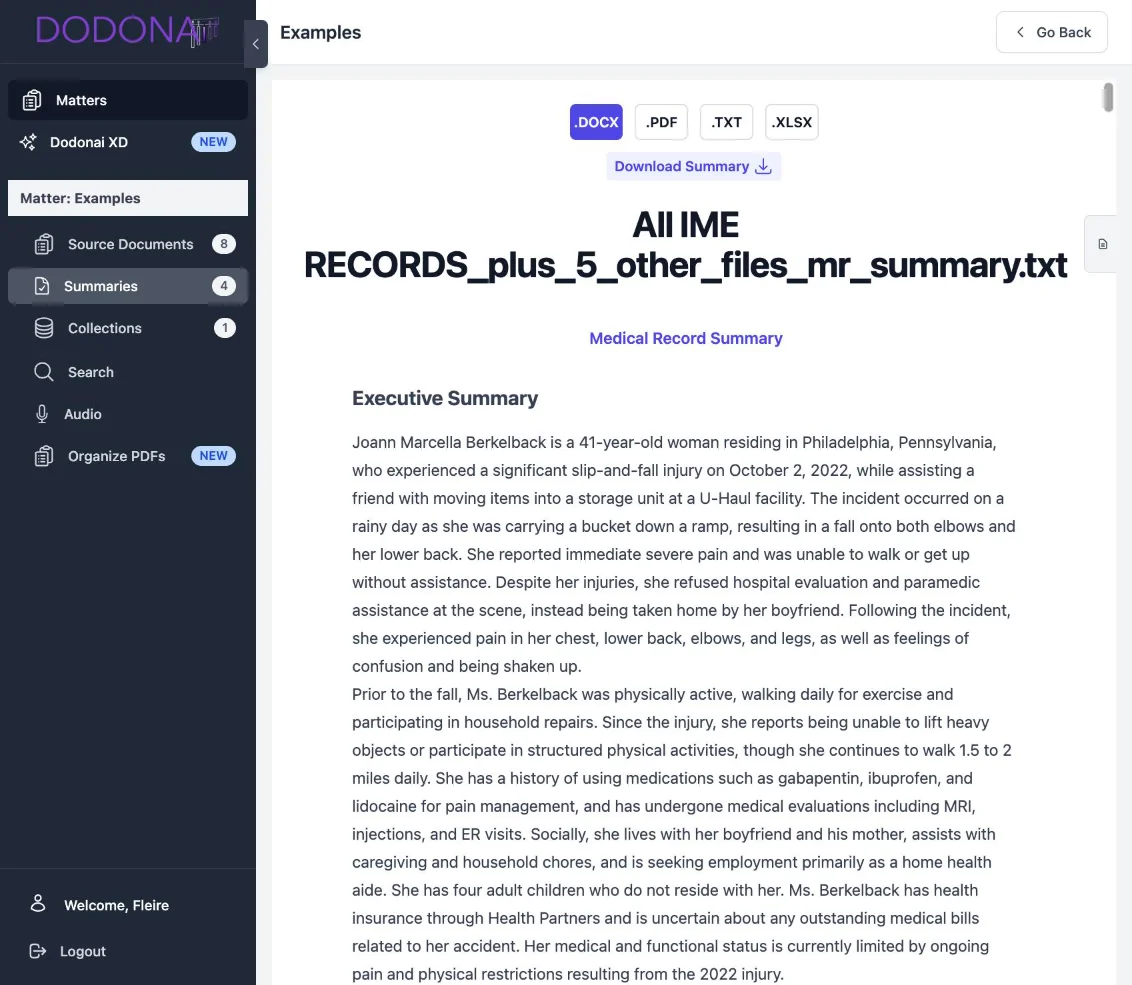
With Dodon.ai: Chronologies can be exported in shareable formats immediately, supporting litigation preparation and discovery without rework.
A faster first-pass medical chronology workflow
For teams focused on reducing medical chronology review time, the highest leverage change is removing prep friction.
A streamlined workflow looks like this:
Bulk upload →
Medical Record summary →
Filter by date/provider →
Export
This sequence shortens first-pass review by removing manual sorting, extraction, and reformatting from the critical path.
Why this matters for litigation teams
Ultimately, a good medical chronology aids a litigation team in evaluating damages, testing causation, and identifying weaknesses early. When review is delayed, strategy is delayed.
The goal isn’t automation for its own sake. It’s getting to a defensible timeline faster, with clear citations back to the source records.
Software like Dodon.ai accelerates preparation so teams can spend their time analyzing facts, not assembling them. Learn more about how teams streamline medical record review workflows.