


Medical records often arrive in large, well-organized PDFs that appear complete. Page numbers are continuous. Date ranges look right. Nothing obvious is missing. Yet litigation teams routinely discover, often too late, that entire providers were never included.
These missing medical records providers create gaps that affect damages analysis, causation opinions, and expert review. The failure isn’t usually negligence. It’s structural.
This article explains why medical record gaps happen in litigation, how teams can spot them earlier, and where provider cross reference fits into a defensible medical chronology workflow.
Why “complete” medical records still have gaps
Most record sets are built from a standard Medical Records Request. Requests go out to known providers based on disclosures, intake forms, or early discovery. That approach assumes the provider list is already complete.
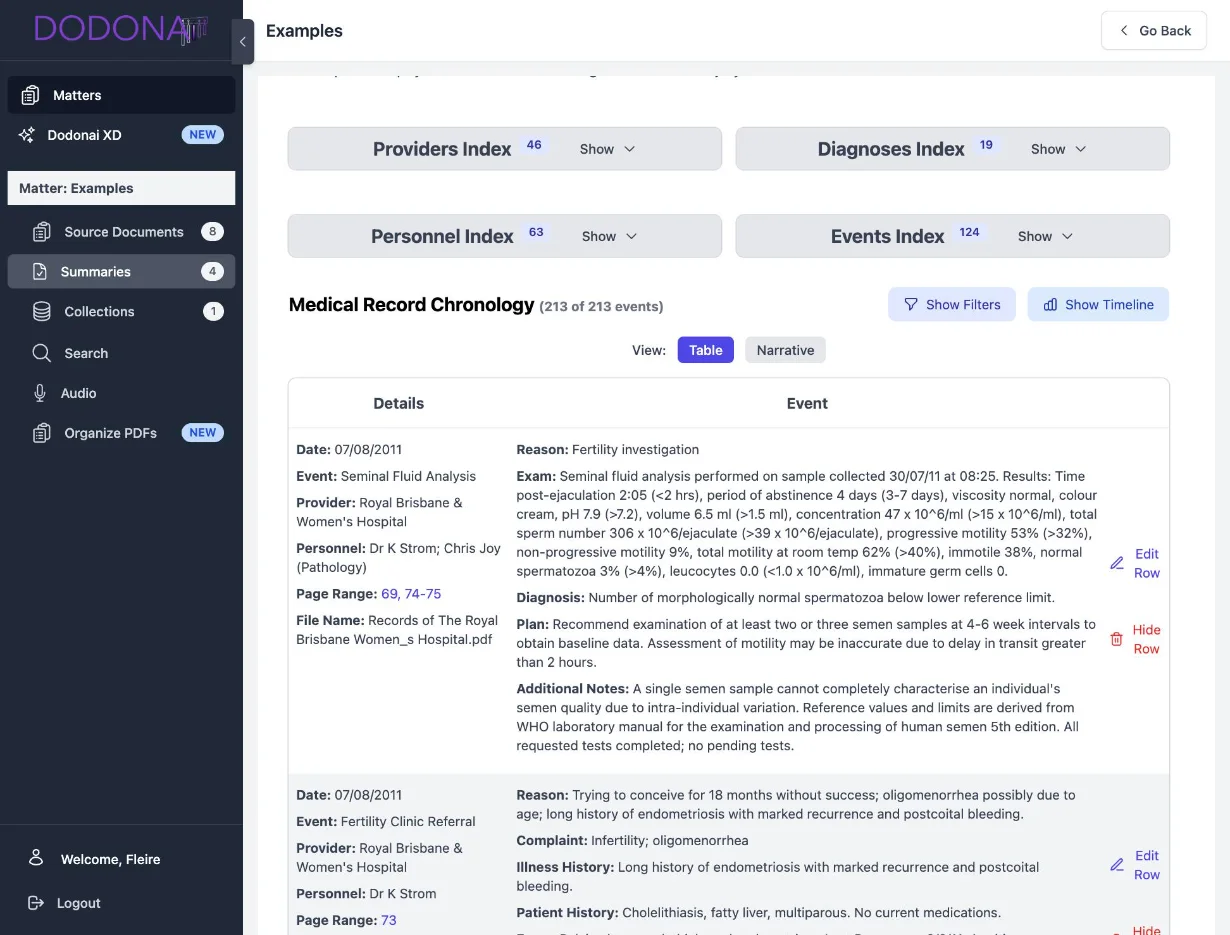
It rarely is.
Common reasons providers are missed:
1. Providers are mentioned inside other providers’ notes
Primary care records routinely reference:
- Outside specialists
- Imaging centers
- Physical therapy clinics
- Surgical facilities
If those entities weren’t named in the original request, their records are absent—even though the chart clearly references them.
2. Facilities and providers don’t align
A hospital chart may reference:
- Independently contracted physicians
- External labs
- Post-acute facilities
Those records live elsewhere and are not automatically included.
3. Chronologies hide gaps by date continuity
A timeline can look clean by date while skipping:
- Entire episodes of care
- Pre-incident treatment
- Post-discharge follow-ups
Without provider-level review, gaps stay hidden.
4. Retrieval vendors fulfill scope, not implications
Medical record retrieval vendors deliver what’s requested. They do not infer additional providers mentioned inside the documents.
The result: medical record gaps in litigation that surface during expert review, not before.
Why missing providers matter before expert review
When providers are missing, teams lose control of timing and narrative.
Common consequences include:
- Experts flagging incomplete treatment histories
- Opposing counsel introducing “new” care late
- Delays caused by midstream record re-requests
- Weak causation analysis due to missing context
Once expert opinions are formed, filling gaps becomes corrective instead of preventative.
The goal is fewer blind spots before expert review begins.
Provider cross reference: the step that prevents gaps
Experienced teams don’t rely solely on what was requested. They cross-check what the records actually say.
Provider cross reference means comparing:
- Providers referenced inside notes
- Against the list of providers already requested
This step is often skipped or rushed because it’s manual.
A defensible provider cross-reference pass includes:
- Reviewing physician notes, discharge summaries, and operative reports
- Flagging outside providers mentioned but not listed
- Checking imaging, PT, and lab references
- Issuing follow-up Medical Records Requests early
Done correctly, this step prevents downstream surprises.
Where chronologies help surface missing providers
A medical chronology isn’t just a timeline. It’s a validation layer.
When records are structured chronologically, provider patterns become visible:
- Providers appear briefly, then disappear
- Gaps emerge between treatment phases
- References appear without corresponding documents
This is where provider-level review belongs during chronology prep, not after expert review. For a step-by-step example of building a chronology that surfaces these gaps, see how to build a provider timeline in 10 minutes.
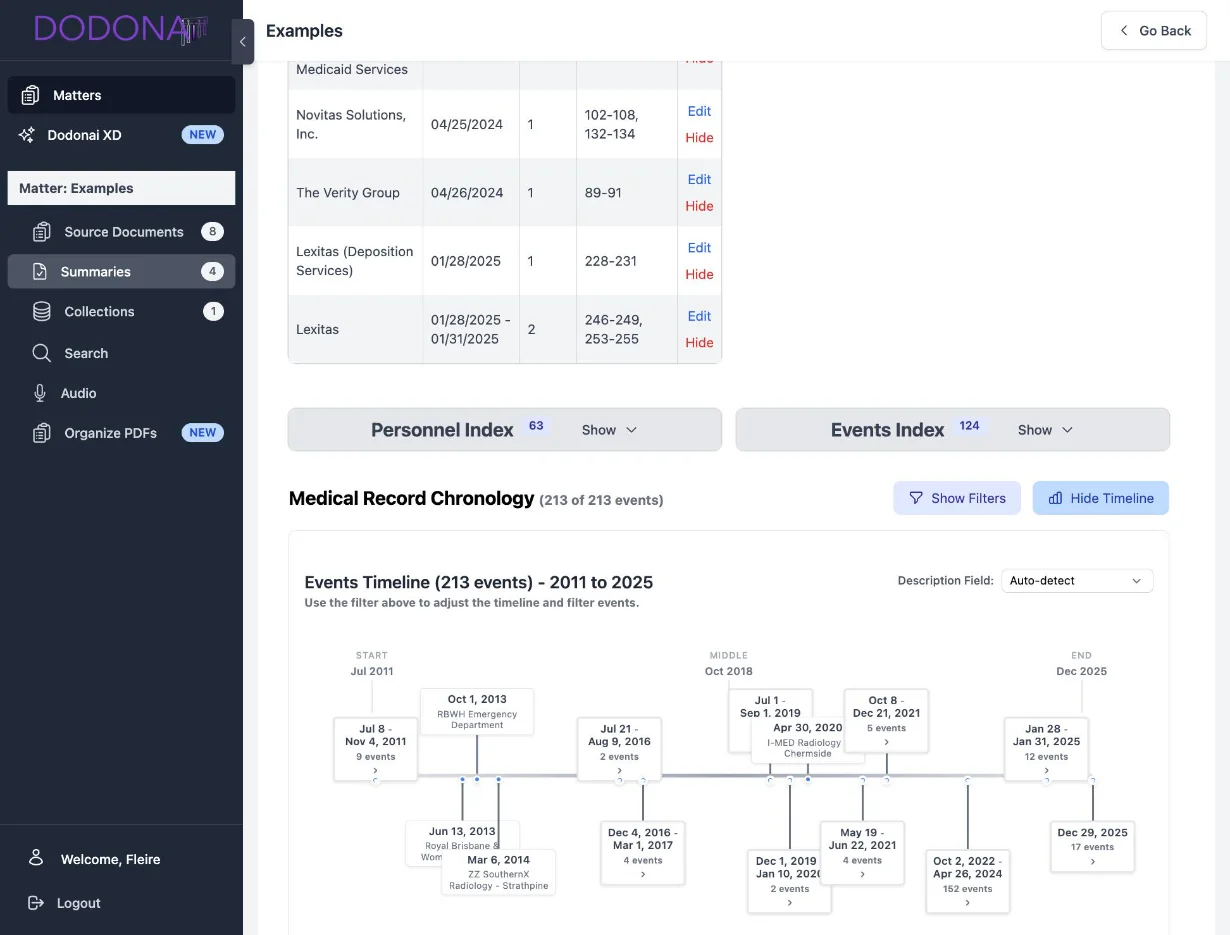
How document automation software supports provider cross reference
Manual review makes provider cross reference inconsistent. Document automation software helps by surfacing providers systematically across the entire record set.
With Dodon.ai:
- Records are read as text, handwriting, and images out of the box
- Providers, facilities, and dates are surfaced across documents
- Chronologies present providers in a consolidated structure
- Teams can search and filter chronologies by provider name
- Citations link directly back to the source page for verification
This supports verification workflows without replacing legal judgment.
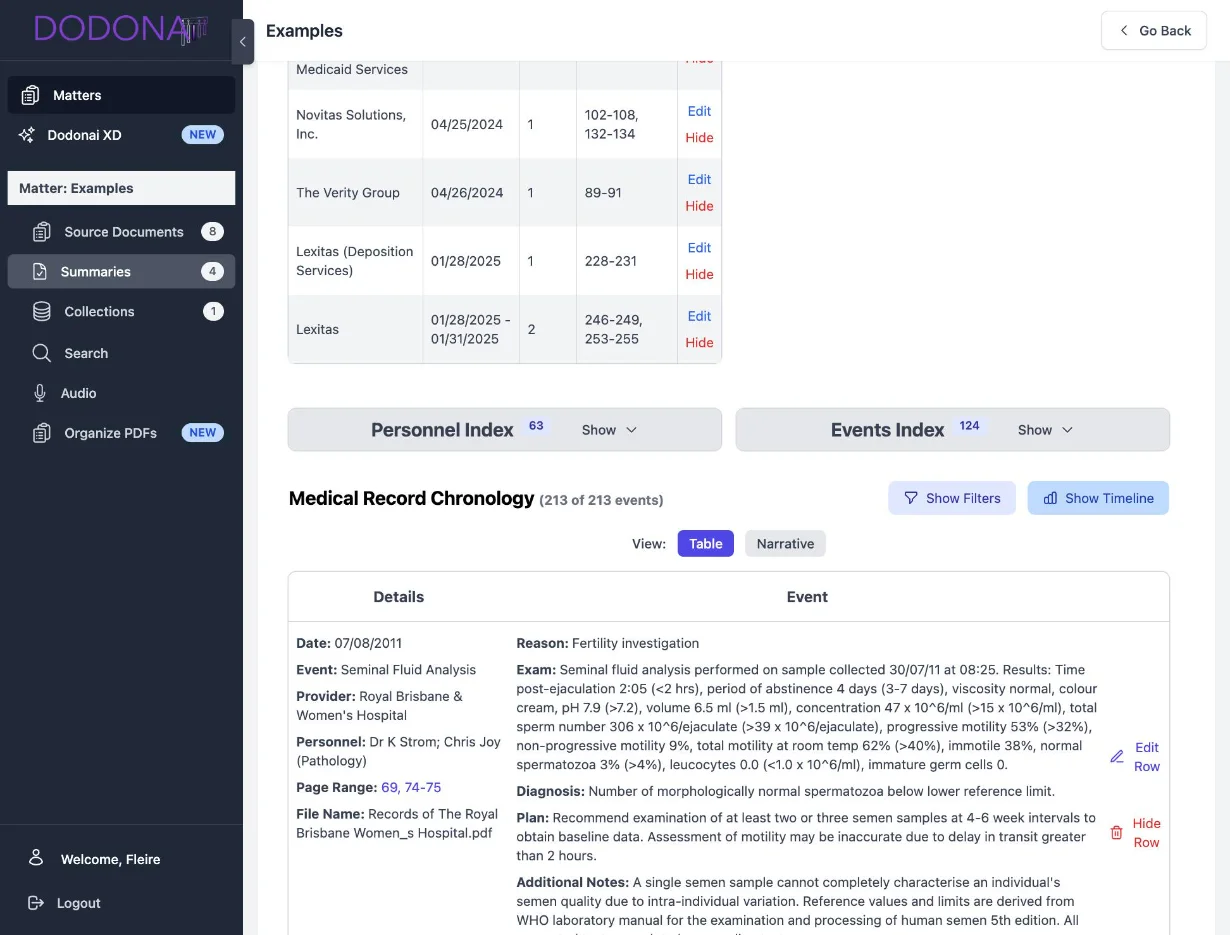
Verification is the real issue, not volume
Most missing-provider problems are framed as “we didn’t get all the records.”
In practice, they’re verification failures.
Verification means confirming:
- The provider list matches what the records reference
- Each referenced provider has corresponding documentation
- Gaps are identified before opinions are formed
Chronology review is one of the earliest points where this can happen reliably.
Where this fits in litigation prep
A clean chronology supports:
- Early case evaluation
- Causation analysis
- Expert preparation
- Discovery planning
Provider cross reference belongs upstream in that workflow. Catching gaps early avoids rework, delays, and credibility issues later.
Final word
Medical records can look complete and still miss providers. The problem isn’t page count—it’s verification.
Teams that cross-reference providers during chronology prep catch gaps earlier, reduce surprises, and maintain control heading into expert review. When sharing these records across teams, make sure patient data stays protected — our HIPAA compliance checklist for medical chronologies covers the essentials. Software like Dodon.ai supports this by presenting records in a format teams can actually validate.
For a deeper look at how chronologies fit into this workflow, see AI Medical Record Summaries & Chronologies in the Medical Chronologies Hub.