
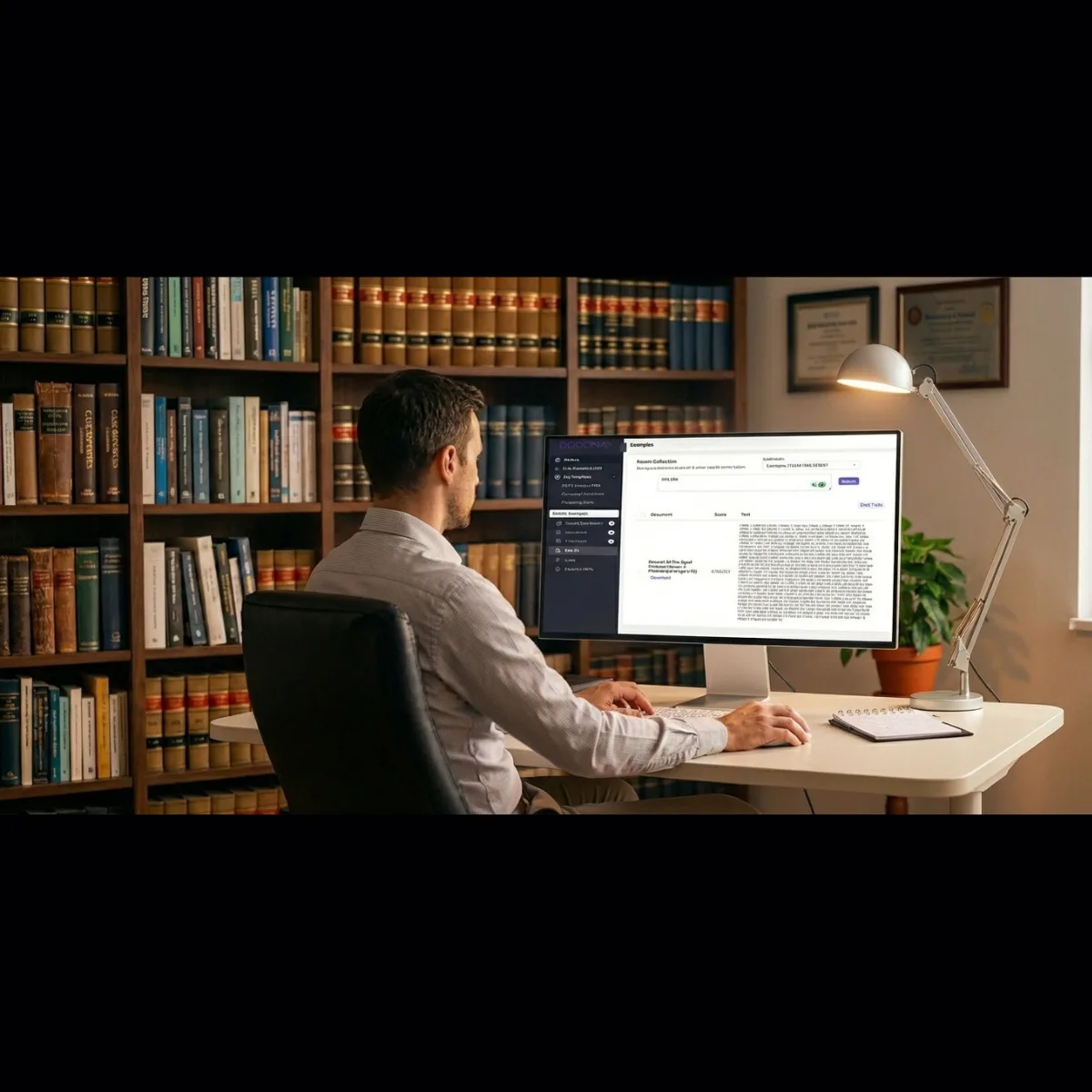
For associates and motion teams facing a stack of deposition transcripts, the traditional path is painfully familiar: read hundreds of pages, write narrative summaries, then extract the issues that matter for your case. But what if you could bypass the narrative step entirely and build a deposition issue list directly from the source, complete with page-line citations ready for your motion outline?
A deposition issue list helps litigation teams identify disputed facts, themes, and testimony directly from deposition transcripts without relying on narrative summaries.
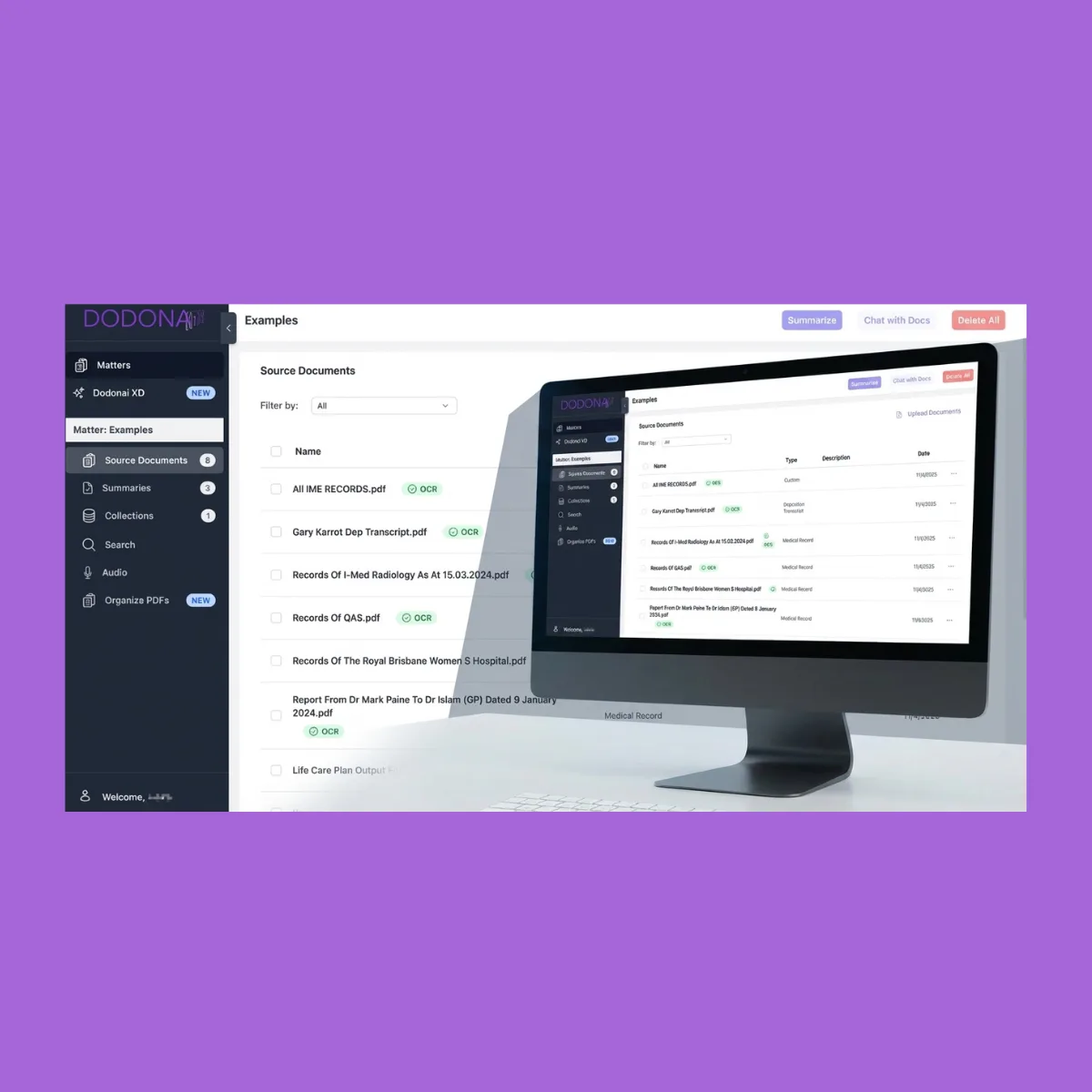
Dodon.ai offers a deposition prep workflow that transforms how legal teams approach issue spotting. Instead of spending hours crafting prose summaries, you can upload a transcript and immediately start collecting cited issues in a structured table format.
How to Build a Deposition Issue List From a Transcript
The process follows a straightforward path that prioritizes efficiency over ceremony:
Step 1: Upload Your Transcript
Upload deposition transcripts directly into a matter workspace. The platform reads text, handwriting, and images out of the box, making scanned transcripts searchable. Each document is catalogued by type, whether it’s a deposition transcript, medical record, or other litigation document.
Step 2: Search or Chat to Surface Issues
Here’s where the workflow diverges from traditional deposition transcript review. Rather than reading start to finish, you can take two approaches:
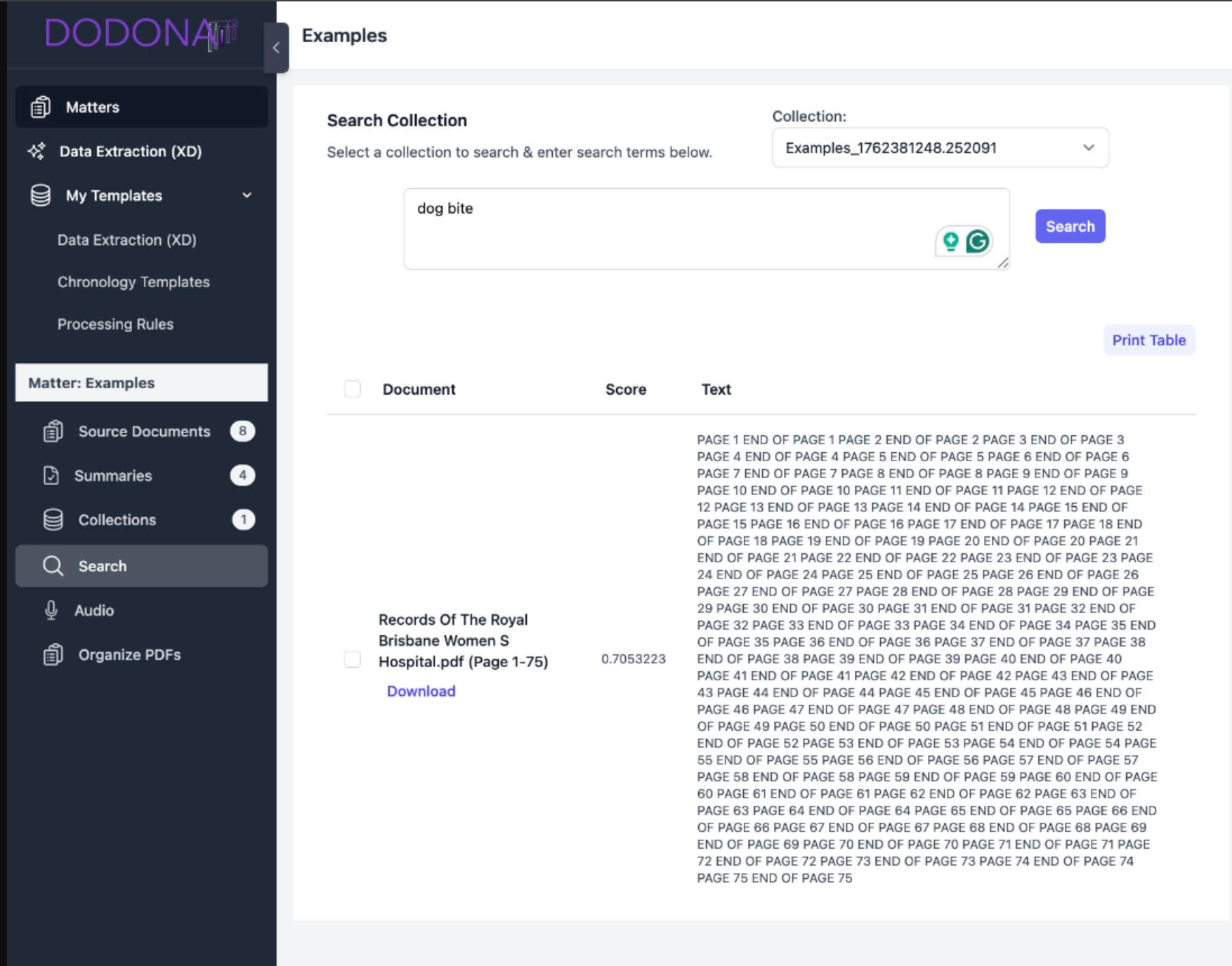
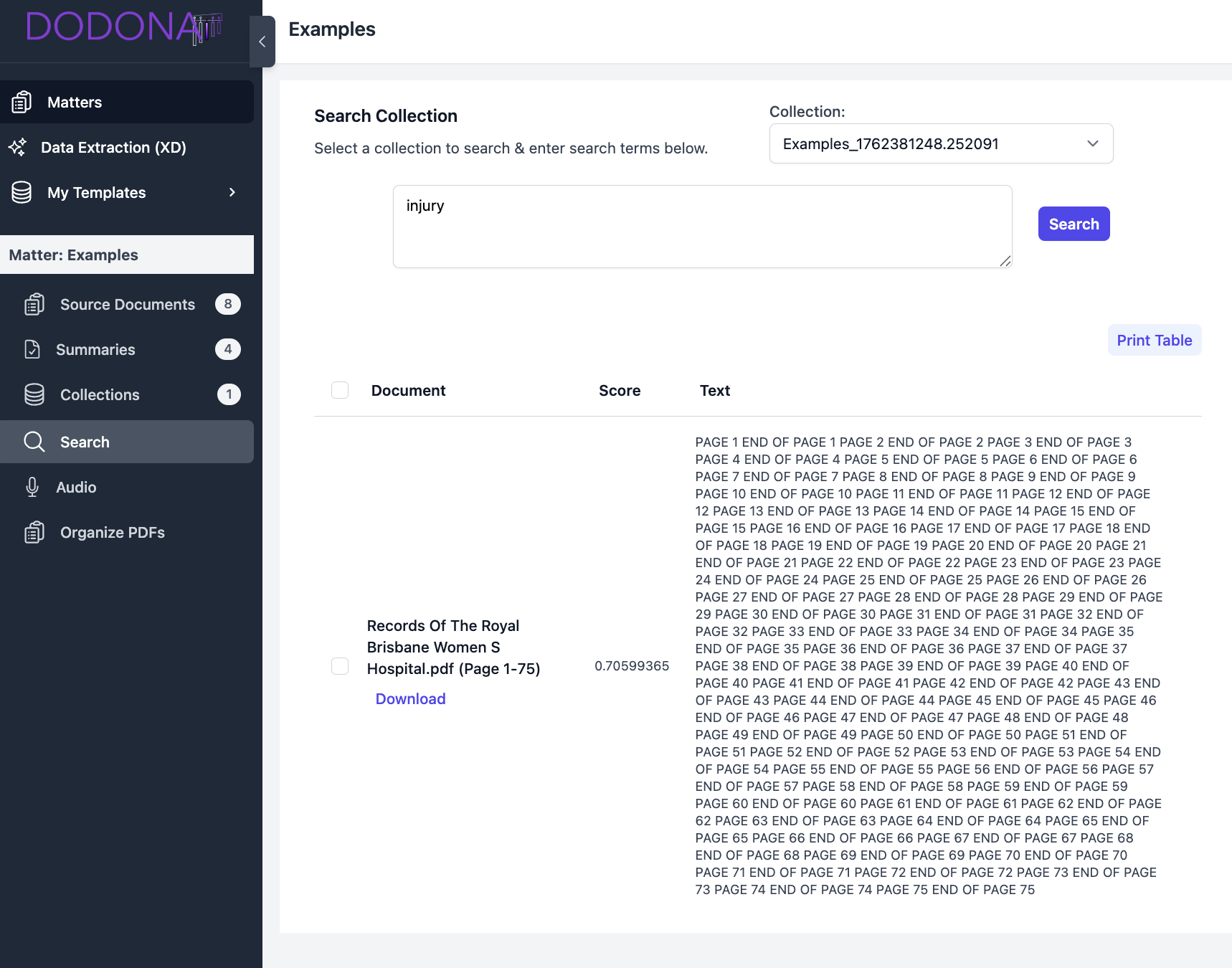
Search Collection: Enter specific terms related to your case issues, contract breach, prior knowledge, damages. The search returns results with relevance scores and document references, showing exactly which pages contain your terms. A “Print Table” button lets you export these results directly.
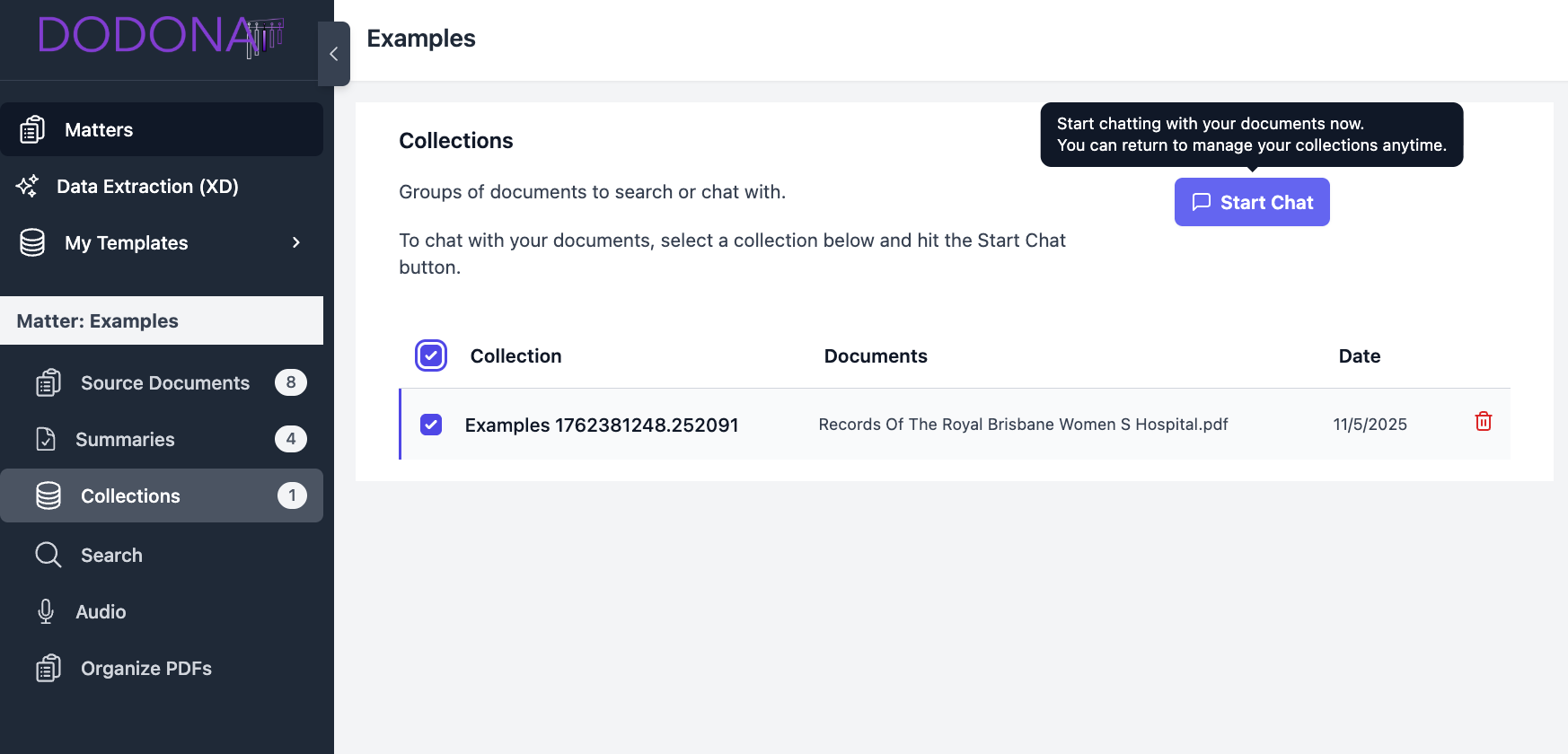
Chat with Documents: For more nuanced issue spotting, the Chat feature allows natural language queries against your transcript collection. Ask about specific topics and receive software-generated responses grounded in the actual testimony.
Step 3: Collect Cited Issues
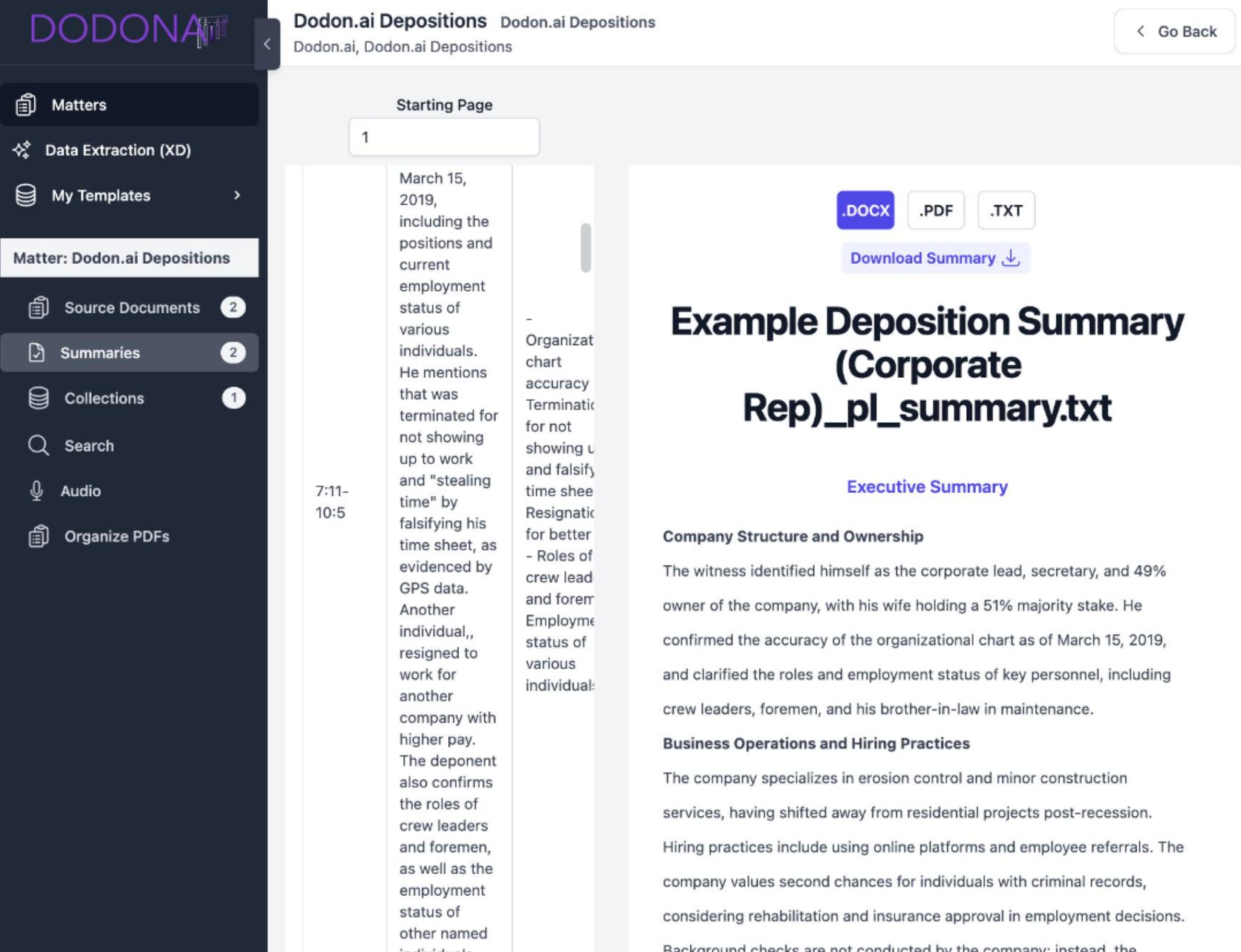
The platform generates structured summaries that skip the narrative and get straight to what matters. The Page-Line Summary format presents testimony in a table with three columns:
- Citation: Exact page and line references (e.g., 4:1-6:18)
- Summary of Testimony: Condensed version of what was said
- Topic Summary: The issue or theme extracted from that testimony
This format maps directly to what you need for motion practice, specific testimony tied to specific issues, with citations ready for motion planning and litigation preparation.
Step 4: Export Your Issue Table
Search results include a “Print Table” button for direct export. Summaries can be exported using “Download Summary” and format options (PDF, DOCX, or TXT). Both generate clean output ready for your case outline or motion team’s reference materials.
Why Skip the Narrative?
Traditional deposition summaries serve a purpose, they help attorneys who weren’t at the deposition understand what happened. But for motion teams and associates preparing outlines, narratives create extra work. You summarize the testimony, extract the issues, then find the citations again when drafting.
The issue-first approach collapses these steps. When you search for “breach of duty” and get a table of every mention with page-line citations, you’ve already built your issue list. When the Page-Line Summary extracts topics like “Company Structure and Ownership” or “Business Operations and Hiring Practices” alongside citations, you’re looking at the skeleton of your motion outline. This streamlined approach to issue spotting eliminates redundant work.
Grounded in the Record
The value here isn’t just speed, but it’s accuracy. Every issue in your list traces back to specific testimony with verifiable citations. The Executive Summary feature organizes findings by topic while maintaining clear connections to the source material. When opposing counsel challenges a characterization, you can point directly to the transcript reference.
Cleaner Prep for What Comes Next
Whether you’re building an outline for a summary judgment motion, preparing cross-examination questions, or briefing senior partners on key testimony, a deposition issue list with citations gives you a foundation that narrative summaries don’t provide. The information is structured, searchable, and immediately useful for motion preparation.
For associates handling multiple depositions per case and motion teams coordinating across witnesses, this workflow means less time synthesizing and more time analyzing. These materials support litigation preparation and discovery; they are not courtroom evidence and require attorney review.
Try issue spotting on one deposition to see how the transcript-to-table workflow fits your practice.
Learn more about deposition transcript issue spotting software →